SEO for Plumbers: How to Get the Call When the Pipe Bursts
By Cham de Silva, Founder, Foundry & Folio ·
SEO for plumbers is about one moment: someone nearby searches "blocked drain" or "emergency plumber near me", and you are on the map and near the top when they do. For most plumbing businesses that comes down to four things: a strong Google Business Profile, a page for each service and suburb you actually want work in, steady genuine reviews, and a website fast enough to tap and call from.
Plumbing is a trade where the search and the job are minutes apart. Get found in that window and the phone rings. Here is what wins it.
What do people actually search when they need a plumber?
People search the problem and the place, not the trade. "Blocked drain Parramatta", "hot water not working", "burst pipe emergency", "plumber near me". Very few people type "plumbing services" and then browse.
That matters because each of those searches is a different page you could rank with. A single homepage that says "we do all plumbing" gives Google nothing specific to match. A page for blocked drains, a page for hot water, a page for leak detection, each saying clearly where you work, gives it plenty.
There are two kinds of plumbing search worth knowing:
- Urgent searches, often on a phone, often after hours. These are decided in seconds, mostly from the map results.
- Planned searches, like hot water replacements, gas fitting or a bathroom renovation. These people compare, read reviews and look at your work before they call.
Good plumbing SEO serves both.
How do I get my plumbing business into the Google map pack?
You get into the map pack with a complete, active Google Business Profile, genuine reviews, and a website that backs up what the profile says. The map pack is the box of three businesses that sits above the normal results for local searches, and for urgent plumbing work it is where a lot of jobs are won.
Google says local results are mainly based on relevance, distance and popularity, and it lays out what helps in its guide to improving your local ranking. In practice, for a plumber, that means:
- The right categories. Plumber as your primary category, with accurate secondary ones for the work you really do.
- A clear service area. The suburbs you cover, not a vague "greater Sydney".
- Real photos. Your van, your team, tidy finished jobs. Not stock images.
- Reviews, steadily. Ask happy customers as part of finishing the job, and reply to every review, good or bad.
- Accurate details. Your hours, including after hours if you offer it, and the same name, address and phone number everywhere. Google's guidelines for representing your business are strict on this, so keep it honest.
Which pages does a plumbing website need to rank?
A plumbing website needs one page per main service and one page per key suburb, each written properly, plus a homepage that makes it obvious who you are and where you work. That structure is what lets Google match you to specific searches instead of guessing.
Keep it curated. Six strong suburb pages for the areas you can genuinely get to quickly beat sixty copies with the name swapped, which Google treats as thin content. Each page should say something real: the housing stock, the jobs you see there, how fast you can turn up.
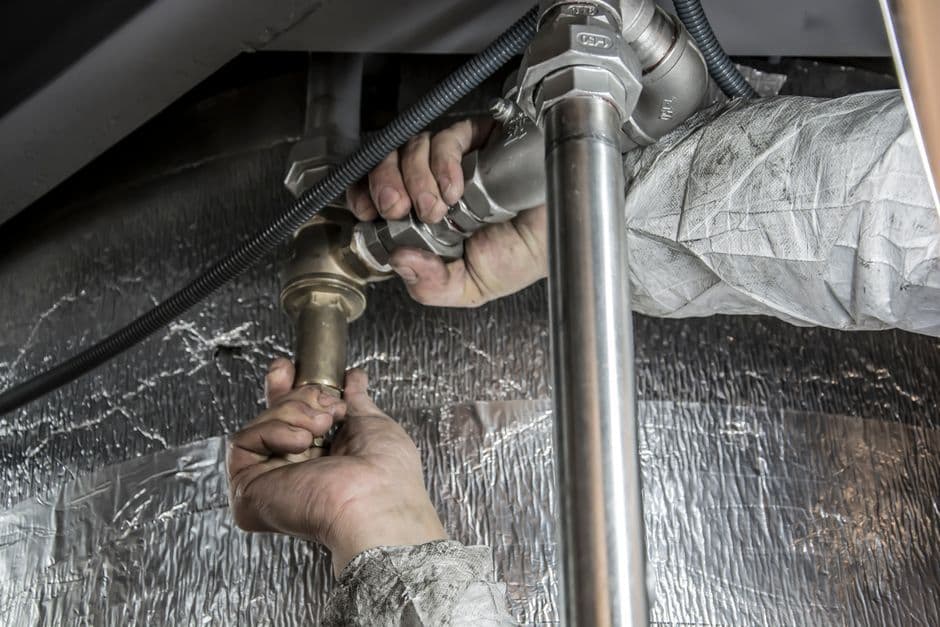
 Plumber at work, the kind of real photo a Google Business Profile needs
Speed and mobile matter as much as the words. If a stressed customer taps through from Google and the page takes too long to load, they hit back and call the next plumber. We go through the full checklist for a plumbing site in a website for plumbers.
Should I pay for Google Ads instead of SEO?
Google Ads and SEO do different jobs, and most plumbers do best with SEO as the base and ads as a top-up. Ads put you at the top today, for as long as you keep paying per click. SEO earns you a place in the map and the organic results that keeps working after the work is done.
A sensible split: build your profile, pages and reviews so you show up without paying, then use ads to cover a busy season, a new suburb, or the searches where you are not ranking yet. If you can only afford to build one, build the one that keeps bringing calls when you stop spending. The same logic applies across trades, which we cover in SEO for tradies.
Frequently asked questions
How long does SEO take for a plumber?
Profile and review work can show movement in weeks. New service and suburb pages usually take a few months to rank, because Google needs time to crawl them and decide to trust them. The plumbers who win keep at it: new reviews, fresh content, tidy details. It compounds.
Can I do my own plumbing SEO?
Yes, a lot of the local basics are owner jobs. Keeping your Google Business Profile complete, adding real photos, asking for reviews and keeping your details consistent all cost nothing but time. Where most plumbers get stuck is the website side and finding time to write regularly.
Does an emergency plumber need different SEO?
The basics are the same, but the details lean harder on speed and trust. Show your after hours availability clearly and accurately on both your profile and your site, make your number tap to call on every page, and make sure your reviews mention the urgent jobs you have handled well.
Built to get the call
We build plumbing sites structured to rank from day one: fast on a phone, a page for every service and suburb that matters, and wired to your Google Business Profile. Our SEO Engine keeps the work going each month, and you can see what is included on our services and pricing page.
Want to know where your plumbing business stands on Google right now? Book a call and we will tell you straight. Websites, forged.
Written by Cham de Silva, who runs Foundry & Folio and builds the sites these guides describe.