Website Development Cost in Australia: What You Are Really Paying For
By Cham de Silva, Founder, Foundry & Folio ·
Website development cost in Australia comes down to what your site has to do. A simple site that shows your services and takes enquiries is a modest build. Add online bookings, payments, customer logins or a connection to your job management or accounting software, and the development time, and the price, goes up. The way to keep it under control is to decide exactly what the site must do before anyone quotes.
Design is how a site looks. Development is how it works. If you want the design side of pricing, our guide to website design cost in Australia covers it. This post is about the build.
What is the difference between website design and website development?
Website design is the look, layout and words. Website development is the build that makes it work: the code, the hosting, the forms, and anything that moves data around. Most small business sites need both, but development is where cost varies the most.
Two sites can look almost the same and cost very different amounts to build. One sends a quote form to your inbox. The other checks your calendar, takes a deposit, sends a reminder text and drops the job into your scheduling software. Same look, very different amount of work underneath.
What makes website development cost more?
Website development costs more when the site has to do more on its own, connect to other systems, or handle customer data and money. Every one of those adds building and testing time.
The common cost drivers, roughly from smallest to biggest:
- Contact and quote forms. Standard on almost every site. Cheap to add, but they need spam protection and need to reach you reliably.
- A blog or editable pages. A content system so you can add posts and update prices without calling a developer.
- Online booking. Showing real availability and stopping double bookings takes care to get right.
- Payments. Taking deposits or selling online means a secure checkout, receipts and refunds that actually work.
- Customer accounts and logins. Anything that stores personal details brings privacy obligations. The OAIC explains what Australian businesses need to know.
- Connections to your other software. Linking the site to your CRM, job management or accounting tool so data flows without retyping. This is often the biggest single variable.
Should I use a website builder, WordPress or a custom build?
Use a website builder if you need something simple, fast and you are happy to do it yourself. Use WordPress if you want a huge range of plugins and someone to maintain them. Choose a custom build if speed, a distinctive look, or features that fit how you actually work matter to your business.
 Colorful PHP code displayed on a dark screen, ideal for programming themes.
Here is the trade-off in plain terms:
- Website builders like Wix and Squarespace are cheap to start, but you are limited to what the platform allows, and you rent rather than own.
- WordPress can do almost anything with plugins, but every plugin is another thing to update and secure. Sites that are left unpatched are a common target for hackers.
- Custom builds cost more to plan, but you get exactly what you need, nothing you do not, and usually a faster site. Google measures speed and stability with its Core Web Vitals, and a slow site loses both rankings and customers.
If your business needs more than a website, such as an internal tool or a booking system that fits your process, that is software development and it should be scoped on its own.
Who should build my website: a freelancer, an agency or offshore?
The right builder is the one who can show you similar work, give you a fixed scope in writing, and look after the site once it is live. Price matters, but the cheapest quote often becomes the dearest site once fixes and rebuilds are added.
- Freelancers can be great value for a straightforward site. Ask what happens if they get sick, get busy or move on.
- Agencies and studios cost more per hour, but you get design, development and ongoing care in one place.
- Offshore developers can quote low hourly rates. Time zones, communication and who owns the code are the things to pin down before you start.
Whoever you pick, make sure the domain, hosting account and code are in your business's name, not theirs.
What does a website cost to run after it is built?
Every website has running costs after launch: hosting, the domain name, security updates, backups and changes as your business grows. Ask every developer to list these separately, because they are where cheap builds often catch people out.
Development does not stop at launch either. New services, new suburbs, a new booking flow or a fix after a software update all take developer time. A site with no one looking after it slowly breaks, slows down and slips in Google. If yours is already in that state, our website repair service can get it back on track.
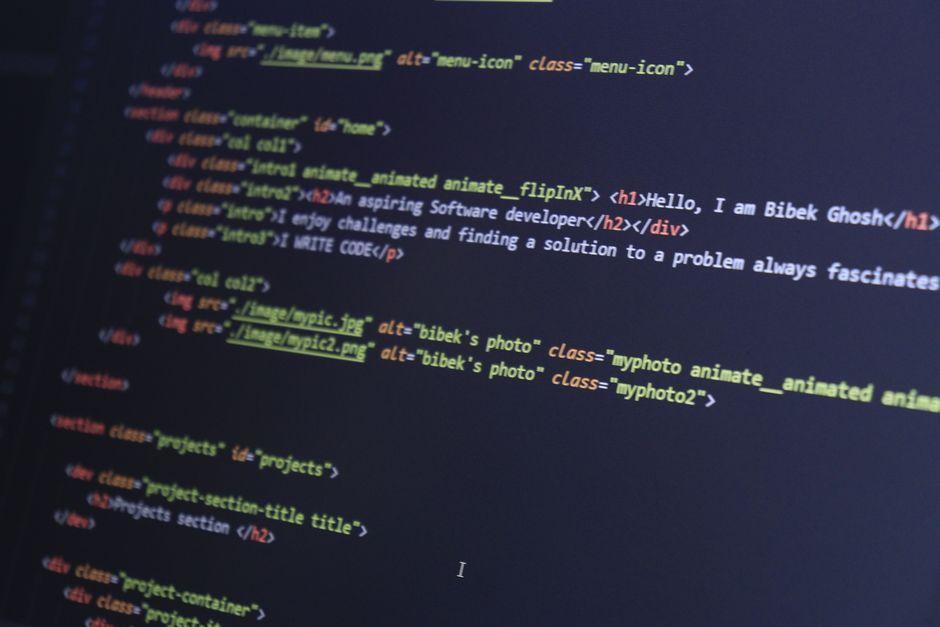
 High-resolution close-up of HTML code displayed on a computer screen, perfect for technology themes.
Website development questions
How long does website development take?
A simple business site can be built in days to a few weeks. Sites with bookings, payments or software connections take longer because each feature needs building and testing. Our own standard sites go from first call to live in about a week.
Can I add features to my website later?
Yes, if it is built well. A good developer plans the site so bookings, payments or new pages can be added later without starting again. Ask about this before you sign, because some cheap builds have to be rebuilt to grow.
How much does Foundry & Folio charge for website development?
Our standard website plans are monthly and published on our services and pricing page, with add-ons like customer payments and AI customer chat priced individually. Custom apps, booking systems and software connections are scoped and quoted on a fixed price once we know what the site needs to do.
Get a fixed quote, not a guess
The best way to control website development cost is to decide what the site must do, get it in writing, and know what it costs to run. If you are planning an online store, our guide to ecommerce website design in Sydney is a good next read.
Want a straight answer on what your build needs? Book a call or get a fixed quote, no jargon, no pressure. Websites, forged.
Written by Cham de Silva, who runs Foundry & Folio and builds the sites these guides describe.